Every November, the same message starts showing up everywhere—on coffee mugs, social media feeds, and family group texts: Be grateful. Count your blessings. Focus on the good.
For a lot of people, that message doesn’t feel comforting. It feels heavy.
If you are navigating complicated family dynamics, grief, estrangement, or the aftermath of betrayal, being told to simply “be thankful” can feel like being asked to pretend your reality isn’t happening. Parts of you may not feel grateful at all—especially toward people you are “supposed” to thank who hurt you, dismissed your experience, or failed to protect you when it mattered.
And that makes complete sense.
When gratitude becomes an obligation rather than an honest feeling, it stops being a healthy practice and starts acting like a muzzle.
When Gratitude Turns Into Toxic Positivity
Genuine gratitude has real psychological benefits. Research from organizations like the American Psychological Association notes that noticing supportive moments in daily life can improve emotional well-being. This relates to our brain’s natural “negativity bias” – the way our human brains evolved to collect and store information about danger – both real and imagined. A true gratitude practice can provide a counterweight to the fear, anger and sadness we hold on to as a result of the negativity bias.
The problem isn’t gratitude itself. The problem is toxic positivity—the unspoken rule that you must put a silver lining on painful experiences and swallow any emotion that makes other people uncomfortable.
During the holidays, gratitude gets weaponized in subtle ways:
- “After everything they’ve done for you…” Using past favors or basic caregiving to erase present harm.
- “Family is everything, so let it go.” Pressuring you to sweep unacknowledged hurt under the rug to keep the peace at the dinner table. Loyalty on demand.
- “At least it wasn’t worse.” Minimizing what happened to you by comparing it to someone else’s pain.
When you are told to feel thankful for people who haven’t treated you safely, your nervous system gets caught in a tug-of-war. One part of you wants to belong and avoid conflict; another part of you remembers what actually happened. Forcing a smile over that disconnect doesn’t create healing. Usually, it just leaves you feeling isolated, exhausted, and doubting your own memory. And the positivity isn’t for your benefit – it’s for theirs.
The “Generosity” Trap: Who Is Getting Benefit of the Doubt They Haven’t Earned?
If you grew up in a family where keeping the peace mattered more than telling the truth, you may have learned to confuse trust and gratitude with endless benefit of the doubt.
In her research on trust, Dr. Brené Brown breaks trust down into seven observable behaviors using the acronym BRAVING—Boundaries, Reliability, Accountability, Vault, Integrity, Non-judgment, and Generosity. In Brown’s framework, generosity means extending the most generous interpretation possible to someone else’s intentions, words, and actions.
In healthy, mutual relationships, that kind of generosity builds connection. When someone snaps because they had a rough day, you pause and check in before assuming the worst.
In my work with clients healing from relational betrayal, however, I see how easily that instinct gets turned upside down. Survivors are conditioned to offer unlimited generosity to the very people who hurt them—explaining away broken promises, excusing cruelty as “just how they are,” and working overtime to find something to be grateful for so they don’t have to face the grief of what was missing.
When that happens, it helps to pause and ask a different question:
“Who in my life has been getting generosity they haven’t earned?”
You do not owe infinite benefit of the doubt to someone who refuses accountability. Noticing that pattern isn’t bitter or unforgiving—it is how you start rebuilding self-trust. (If you’d like to explore this further, this exact reflection is part of our free downloadable guide on rebuilding trust after betrayal.)
What Honest Gratitude Actually Looks Like
Letting go of forced holiday cheer doesn’t mean you have to become cynical. It simply means letting gratitude rest where it is actually true.
1. Gratitude doesn’t require forgiveness or reconciliation
You can appreciate a quiet morning, a supportive friend, or a warm meal without pretending a harmful relationship is safe. Healing and reconciliation are two separate things. You are allowed to hold boundaries—or keep distance—while still recognizing what is genuinely good in your life.
2. You can thank the parts of you that kept you safe
In Internal Family Systems (IFS) therapy, we look at the protective “parts” of you that step in after you’ve been hurt. Maybe a guarded part of you makes it hard to relax at family gatherings, or a people-pleasing part automatically says yes when you want to say no. Even when those patterns feel exhausting now, they developed for a reason: they were trying to protect you from getting hurt again. Honoring your own survival instincts is a quiet, grounded form of gratitude (and self-compassion).
3. Direct your gratitude toward the people who fill your “marble jar”
Brené Brown compares trust to a jar of marbles. Trust isn’t built through grand holiday gestures or obligatory family loyalty—it is built one marble at a time, through small, consistent moments of care.
Think about the people who actually show up for you:
- The friend who checks in after a hard conversation without making it about themselves.
- The partner or sibling who respects your “no” without sulking or punishing you later.
- The person who listens when you share something vulnerable and keeps it safe.
Those are the people slowly filling your marble jar. Letting your gratitude land on them—rather than forcing it toward people who leave your jar empty—feels completely different in your body. It feels steady instead of performative. And if you’re still learning how to spot those small signs of safety after someone broke your trust, our free BRAVING trust guide breaks down what to look for step by step.
Going Deeper: Rebuilding Trust After Betrayal
If the holidays bring up complicated feelings about who is safe to let close—and who isn’t—you don’t have to sort through all of it alone.
I created a free downloadable resource, BRAVING: The Anatomy of Trust — Seven Signs You’re With a Safe Person After Someone Broke Your Trust, specifically for people navigating this territory. Building on Brené Brown’s BRAVING framework alongside brain science and trauma-informed reflections from my clinical work, the guide walks through:
- Why your nervous system stays on high alert after betrayal (and why that reaction makes sense).
- How patterns like DARVO (Deny, Attack, Reverse Victim and Offender) erode self-trust.
- Practical “green flags” and reflection prompts for each of the seven parts of trust.
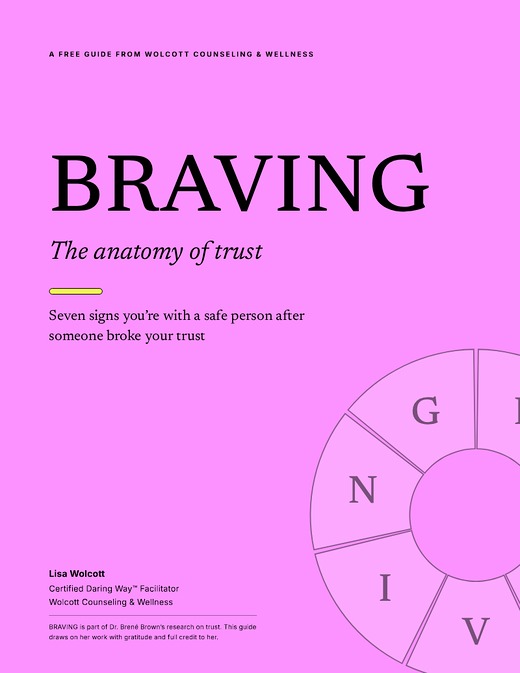
Download the Free Guide: BRAVING — The Anatomy of Trust
Enter your first name and email, and we’ll send the guide straight to your inbox.
Three Gentle Ways to Navigate Thanksgiving Week
If you are heading into holiday gatherings with mixed emotions, here are a few low-pressure ways to stay grounded:
- Drop the performance. You don’t have to manufacture warm feelings on cue. Polite, neutral boundaries are enough.
- Name what is true privately. Give yourself five minutes to write down what you actually feel—without editing it to sound grateful or polite. Two things can be true at once: you can miss the family you wished you had and feel relieved by the boundaries you hold today.
- Anchor yourself to safe connections. Plan a text check-in, coffee, or walk with someone who has earned a place in your marble jar—before and after a stressful event.
Frequently Asked Questions About Holiday Gratitude and Family Dynamics
Is it normal to feel angry or sad during Thanksgiving instead of grateful?
Yes. Holidays tend to highlight the gap between the relationships we wish we had and the ones we actually have. Feeling grief, anger, or numbness around family gatherings is a common, understandable response—especially if past harm has gone unacknowledged.
Does setting boundaries with family mean I’m ungrateful?
No. Boundaries clarify what is okay and not okay for you so you can stay emotionally and physically safe. Healthy relationships make room for limits without guilt trips or punishment.
How can I practice gratitude without invalidating my trauma?
Keep gratitude specific and honest. Instead of forcing broad statements like “I’m thankful for my family,” focus on concrete things that actually feel safe and true—such as your own resilience, a supportive friend, a pet, or a boundary you honored this week.
What if I’m not ready to trust anyone right now?
That is completely okay. Rebuilding trust after betrayal happens slowly, in small steps, and on your timeline. You don’t have to decide today who is safe—you can simply pay attention to how people behave over time.
Support When the Holidays Feel Heavy
You don’t have to force yourself to feel thankful for situations that hurt you, and you don’t have to carry complicated family dynamics by yourself.
Whether you want to start by exploring our free BRAVING trust guide at your own pace or prefer sitting down with someone who understands relational trauma, support is available. At Wolcott Counseling & Wellness, our team offers compassionate, trauma-informed therapy and individual counseling—both in person and via convenient telehealth—for people healing from betrayal, anxiety, and difficult relationships. If you’d like a safe place to process what this season brings up, you are welcome to reach out to our team to schedule a free consultation.